


How to ensure a stable flame and prevent heat loss when operating an open-door heating stove with the door open?
Release Time : 2026-02-25
In winter use, the stability of the flame and the efficiency of heat retention in an open-door heating stove directly affect its heating effect and safety. Its core principle lies in achieving a dynamic balance between oxygen supply and heat dissipation through scientifically designed furnace structure, optimized ventilation system, and standardized operating procedures. The following analysis focuses on seven dimensions: furnace sealing, ventilation adjustment, fuel selection, ignition sequence, flame observation, maintenance, and safety protection.
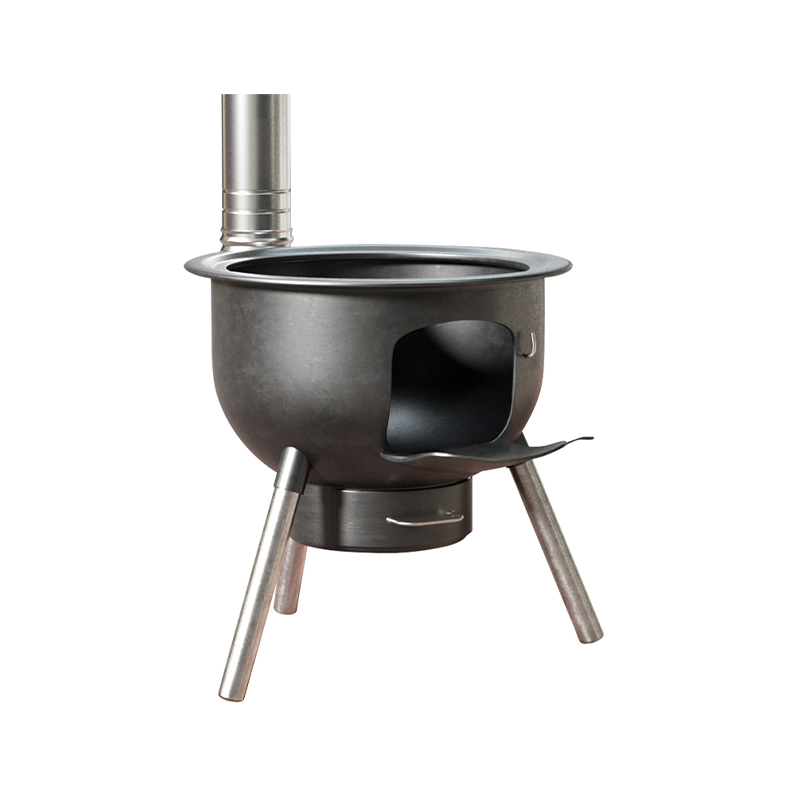
Furnace sealing is fundamental to preventing heat loss. The furnace door of an open-door heating stove must be made of high-density refractory material, with silicone sealing strips embedded at the edges to ensure seamless contact with the furnace body when closed. Some high-end models add a metal pressure strip on the inside of the door, which automatically seals against the furnace opening via a spring device, further reducing cold air infiltration. The observation window of the furnace door should be made of double-layered tempered glass with an argon gas insulation layer in between, allowing observation of the flame status while reducing heat transfer efficiency. The connection between the furnace body and the chimney must be secured with metal clamps and coated with high-temperature resistant sealant to prevent backflow of flue gas or heat loss from the interface.
The ventilation adjustment system directly affects the flame combustion efficiency. Heating stoves are typically equipped with a rotating damper located at the bottom or side of the stove body. The amount of oxygen entering is controlled by adjusting the opening angle. Initially, the damper should be fully opened to ensure rapid fuel ignition; once the flame stabilizes, the opening should be gradually reduced to prevent excessive oxygen and flickering flame. Some models employ automatic oxygen control technology, using thermocouple sensors to monitor the furnace temperature and a motor to drive the damper's opening and closing, maintaining optimal combustion. The exhaust vent at the rear of the stove must be kept clear and ash regularly cleaned to prevent negative pressure inside the furnace due to poor ventilation, which could lead to flame extinguishing or carbon monoxide backflow.
For open-door heating stoves, fuel selection and addition methods are crucial for maintaining a stable flame. Solid fuels such as charcoal and coal should be selected with uniform lumps and few impurities to avoid clogging the vents with powdered fuel. Liquid fuels such as alcohol and bio-oil require a dedicated burner to ensure good atomization from the nozzle. Fuel should be added in small amounts frequently, waiting until the fuel inside the stove is red-hot before adding new fuel to prevent localized oxygen deficiency due to fuel accumulation. For scenarios requiring continuous use, a layered addition method can be adopted: first, lay a layer of igniter at the bottom of the furnace, then place the main fuel in the middle, and finally cover the top with a small amount of accelerant to form a gradient combustion structure.
The ignition sequence of an open-door heating stove directly affects the initial combustion effect. The correct operation should be as follows: first, clean the residual ash in the furnace chamber to ensure unobstructed ventilation; evenly spread the igniter (such as waste paper or dry branches) at the bottom of the furnace; after igniting the igniter, gently place the main fuel on top with tongs, avoiding direct pressing which could extinguish the flame; once a grayish-white char layer appears on the surface of the main fuel, slowly adjust the damper to the appropriate opening. If using liquid fuel, close the damper first, ignite the ignition plate, and then open the fuel valve to prevent the flame from being blown out by the airflow.
Observing the flame status of the open-door heating stove is an important basis for adjusting the operation. A stable burning flame should be bright blue-white with a slightly yellowish top, and the flame height should be approximately two-thirds of the furnace height. If the flame is dark red and accompanied by thick smoke, it indicates insufficient oxygen, and the damper opening needs to be increased. If the flame flickers violently and makes a "whooshing" sound, it indicates excessive oxygen, and the damper needs to be reduced. The furnace interior should maintain a uniformly red-hot state. If localized overheating or underheating areas appear, the fuel distribution or ventilation volume needs to be adjusted.
Regular maintenance can extend the equipment's service life. Weekly cleaning of accumulated ash in the furnace and using a soft brush to remove carbon deposits from the burner surface are necessary. Monthly checks for aging and cracking of the sealing strips, replacing damaged parts promptly. Quarterly deep cleaning of the chimney, using professional tools to remove deposits from the inner walls. When not in use for extended periods, the fuel in the furnace must be completely burned off, all valves closed, and the equipment stored in a dry, well-ventilated area to prevent metal parts from rusting.
Safety precautions are paramount during operation. Flammable materials must not be placed within 1 meter of the open-door heating stove. A fireproof partition must be installed on top. Maintain adequate ventilation during use to prevent carbon monoxide buildup. Install a carbon monoxide alarm and check its sensitivity regularly. Children and pets must be kept away from the operating stove to prevent burns or knocking over the equipment. If abnormal flames, unusual odors, or dizziness are detected, stop using the stove immediately, open windows for ventilation, and investigate the cause of the malfunction.