


How does the small round belly windmill door stove balance traditional fuels with modern home heating needs?
Release Time : 2026-01-14
In today's diversified energy landscape, people's expectations for heating equipment go beyond simply "generating heat." They also emphasize safety, aesthetics, environmental friendliness, and multifunctionality. The small round belly windmill door stove is a product of this shift—it retains the reliable heat source advantages of traditional wood/coal stoves while cleverly integrating into modern home living scenarios through structural innovation and design optimization, becoming a unique carrier connecting traditional wisdom with contemporary lifestyles.
1. Efficient Utilization of Traditional Fuels: Clean Combustion of Firewood and Coal
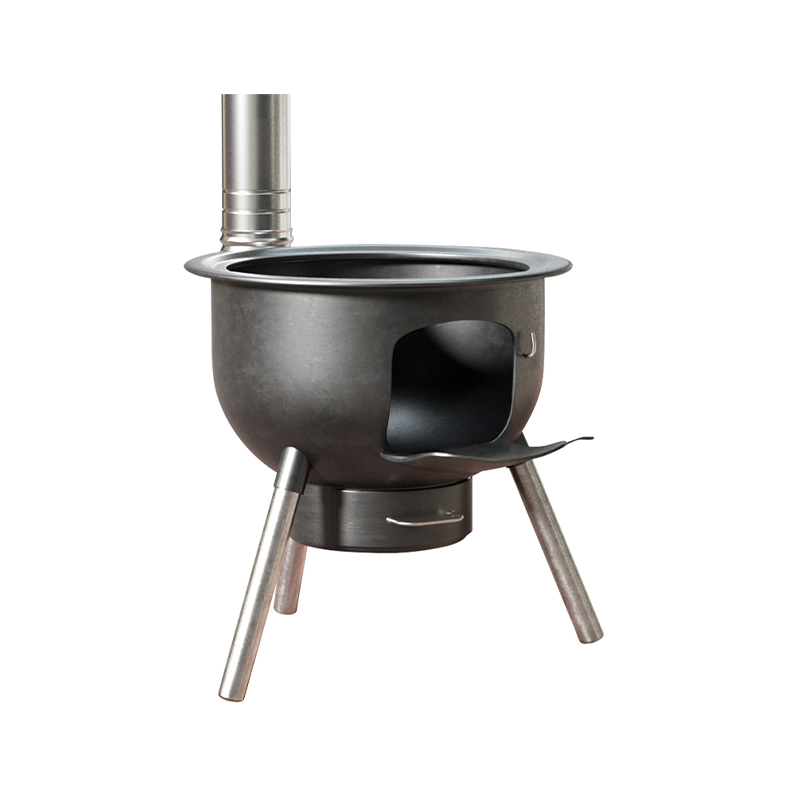
The core advantage of the small round belly windmill door stove lies in its compatibility with renewable or readily available solid fuels. Firewood, as a biomass energy source, is carbon-neutral during combustion; coal has a high calorific value and stable storage. The stove body adopts a round belly structure with a streamlined internal space, which facilitates hot air circulation, extends the fuel combustion path, and allows for full heat release. The crucial "windmill door" design—an air inlet with a rotatable and adjustable baffle—precisely controls the primary air supply. Users can adjust the oxygen intake rate by turning the damper handle, flexibly switching between "slow combustion and heat preservation" and "rapid combustion." Combined with the secondary air intake system, unburned volatiles can be reburned in the upper part of the furnace, significantly reducing black smoke and particulate matter emissions, making traditional fuel combustion closer to modern environmental standards.
2. Rounded Shape and Optimized Heat Radiation: Warm but Not Overheating
Unlike square furnace bodies that are prone to localized overheating, the rounded design is not only visually appealing but also conforms to thermodynamic principles. The circular furnace wall allows heat to diffuse evenly in all directions via radiation, avoiding heat accumulation in right-angled areas and creating a gentle, continuous "enveloping" warmth. The cast iron or thick steel plate material has high heat capacity, allowing for continuous heat dissipation for several hours even after the fuel has burned out, making it particularly suitable for spaces requiring stable room temperatures, such as bedrooms and living rooms. At the same time, the furnace surface temperature is controllable, and with the insulated base and safety railing, it effectively prevents burns to children or pets, meeting the stringent safety requirements of modern families.
3. Multifunctional Integration: Extending the Scope from Heating to Cooking
Modern homes prioritize efficient space utilization, and the small round belly windmill door stove perfectly integrates heating, boiling water, and cooking. Its flat and sturdy top can hold a kettle, stew pot, or frying pan, allowing for a quick and easy preparation of hot water or soup on a winter morning. Some models also feature a grill rack or side-mounted oven, expanding baking capabilities. This multi-functionality not only saves energy in the kitchen but also provides reliable energy during power outages and extreme weather, aligning with the modern concept of "resilient living."
4. Aesthetic Integration and Spatial Adaptation: Retro Appearance, Modern Context
Despite using traditional fuels, the small round belly windmill door stove avoids a rugged and bulky appearance. Its simple curves, matte metallic finish, and optional enamel finish or retro brass fittings allow it to blend seamlessly into Scandinavian, industrial, and even minimalist Japanese home environments. Its compact size makes it suitable for small apartments, lofts, or converted balconies. The chimney can be connected to existing exhaust ducts or designed for direct connection, offering flexible installation without disrupting existing decor.
5. Sustainability and Economy: A Green Choice with Low Operating Costs
Amidst fluctuating natural gas prices and high dependence on electricity, firewood and loose coal still offer significant cost advantages. The small round belly windmill door stove's annual fuel costs are far lower than electric heaters or air conditioning, and it is not reliant on the power grid, making it particularly practical in remote areas or outdoor cabins. Furthermore, its all-metal structure, devoid of electronic components, boasts a lifespan of over 10 years, is easy to maintain, and truly embodies the sustainable consumption concept of "buy once, use for many years."
The small round belly windmill door stove is not merely a nostalgic replica, but a product of a deep dialogue between traditional craftsmanship and modern needs. It responds to contemporary demands for energy independence, quality of life, and emergency resilience through the warmth of its flame. In this era of rapid technological advancement, such a stove, capable of both burning firewood for tea and warming the home, is like a miniature "hearth," rekindling the warm connection between humanity and nature, tradition and modernity.
1. Efficient Utilization of Traditional Fuels: Clean Combustion of Firewood and Coal
The core advantage of the small round belly windmill door stove lies in its compatibility with renewable or readily available solid fuels. Firewood, as a biomass energy source, is carbon-neutral during combustion; coal has a high calorific value and stable storage. The stove body adopts a round belly structure with a streamlined internal space, which facilitates hot air circulation, extends the fuel combustion path, and allows for full heat release. The crucial "windmill door" design—an air inlet with a rotatable and adjustable baffle—precisely controls the primary air supply. Users can adjust the oxygen intake rate by turning the damper handle, flexibly switching between "slow combustion and heat preservation" and "rapid combustion." Combined with the secondary air intake system, unburned volatiles can be reburned in the upper part of the furnace, significantly reducing black smoke and particulate matter emissions, making traditional fuel combustion closer to modern environmental standards.
2. Rounded Shape and Optimized Heat Radiation: Warm but Not Overheating
Unlike square furnace bodies that are prone to localized overheating, the rounded design is not only visually appealing but also conforms to thermodynamic principles. The circular furnace wall allows heat to diffuse evenly in all directions via radiation, avoiding heat accumulation in right-angled areas and creating a gentle, continuous "enveloping" warmth. The cast iron or thick steel plate material has high heat capacity, allowing for continuous heat dissipation for several hours even after the fuel has burned out, making it particularly suitable for spaces requiring stable room temperatures, such as bedrooms and living rooms. At the same time, the furnace surface temperature is controllable, and with the insulated base and safety railing, it effectively prevents burns to children or pets, meeting the stringent safety requirements of modern families.
3. Multifunctional Integration: Extending the Scope from Heating to Cooking
Modern homes prioritize efficient space utilization, and the small round belly windmill door stove perfectly integrates heating, boiling water, and cooking. Its flat and sturdy top can hold a kettle, stew pot, or frying pan, allowing for a quick and easy preparation of hot water or soup on a winter morning. Some models also feature a grill rack or side-mounted oven, expanding baking capabilities. This multi-functionality not only saves energy in the kitchen but also provides reliable energy during power outages and extreme weather, aligning with the modern concept of "resilient living."
4. Aesthetic Integration and Spatial Adaptation: Retro Appearance, Modern Context
Despite using traditional fuels, the small round belly windmill door stove avoids a rugged and bulky appearance. Its simple curves, matte metallic finish, and optional enamel finish or retro brass fittings allow it to blend seamlessly into Scandinavian, industrial, and even minimalist Japanese home environments. Its compact size makes it suitable for small apartments, lofts, or converted balconies. The chimney can be connected to existing exhaust ducts or designed for direct connection, offering flexible installation without disrupting existing decor.
5. Sustainability and Economy: A Green Choice with Low Operating Costs
Amidst fluctuating natural gas prices and high dependence on electricity, firewood and loose coal still offer significant cost advantages. The small round belly windmill door stove's annual fuel costs are far lower than electric heaters or air conditioning, and it is not reliant on the power grid, making it particularly practical in remote areas or outdoor cabins. Furthermore, its all-metal structure, devoid of electronic components, boasts a lifespan of over 10 years, is easy to maintain, and truly embodies the sustainable consumption concept of "buy once, use for many years."
The small round belly windmill door stove is not merely a nostalgic replica, but a product of a deep dialogue between traditional craftsmanship and modern needs. It responds to contemporary demands for energy independence, quality of life, and emergency resilience through the warmth of its flame. In this era of rapid technological advancement, such a stove, capable of both burning firewood for tea and warming the home, is like a miniature "hearth," rekindling the warm connection between humanity and nature, tradition and modernity.