
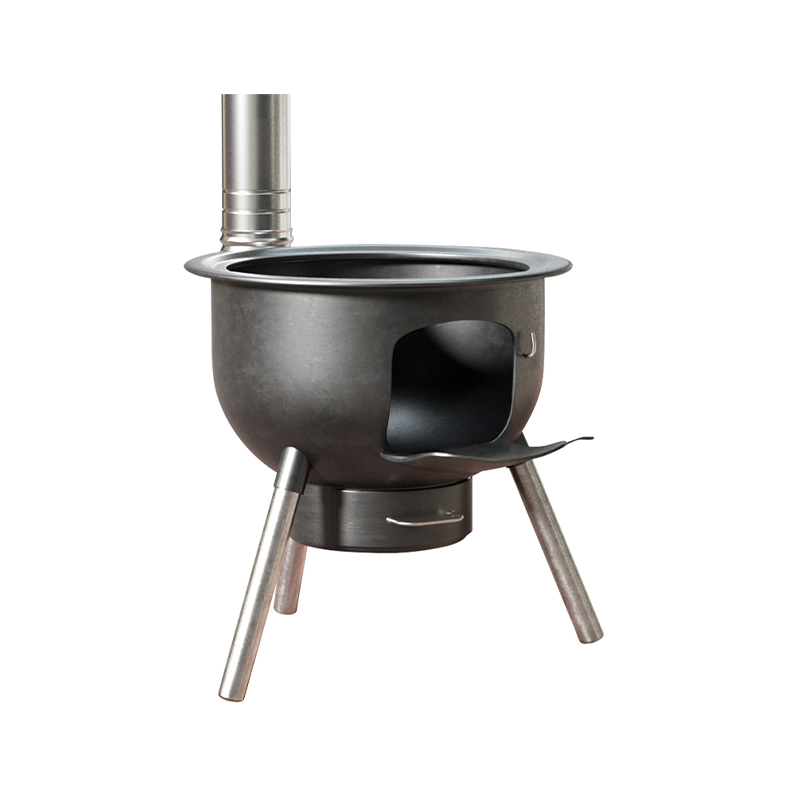


How does a large windmill door oven with internet celebrity stove achieve a precise balance between combustion efficiency and temperature control through damper adjustment?
Release Time : 2025-12-17
As a multi-functional thermal energy device integrating heating, cooking, and boiling water, the core performance of a large windmill door oven with internet celebrity stove depends not only on the stove structure and fuel type, but more importantly on the precise control of the combustion process. Among these, the "damper" system—especially the "windmill door" with rotating or adjustable blades—plays a crucial role. By scientifically adjusting the opening and closing degree of the damper, users can precisely control the air intake, combustion rate, and furnace temperature, thereby achieving a dynamic balance between efficient combustion and stable heating, ensuring heating and cooking effects while avoiding fuel waste and excessive emissions.
1. Damper: The "Breathing Valve" of the Combustion System
The damper is essentially a switch that controls the passage of primary air into the furnace. In a large windmill door oven with internet celebrity stove, the windmill door is usually located at the bottom or front of the furnace and consists of multiple rotating metal blades, resembling a windmill, hence its name. When the damper is open, cold outside air is drawn into the furnace bottom, passes through the fuel layer, and provides oxygen for the oxidation reaction of wood or coal; closing it restricts oxygen supply and slows combustion. This "controllable oxygen supply" mechanism allows users to precisely manage the fire, much like adjusting the flame of a gas stove.
2. High-Efficiency Combustion: Sufficient Oxygen Supply Releases Maximum Calorific Value
Complete combustion of wood and coal requires sufficient oxygen. If the damper opening is too small, insufficient oxygen will lead to incomplete combustion, producing large amounts of black smoke, carbon monoxide, and tar. This not only results in low thermal efficiency but also pollutes the flue and harms health. When the damper is appropriately opened, primary air fully penetrates the fuel layer, promoting rapid combustion of volatiles and complete oxidation of the carbon core, resulting in a bright flame, concentrated heat, and a rapid rise in furnace temperature. At this time, the oven heats up quickly, providing strong heating, maximizing the utilization of fuel calorific value, and achieving high combustion efficiency.
3. Temperature Control: Controlling the Fire with Air, Stable and Moderate
However, a larger damper is not always better. Excessive air intake will draw heat away from the furnace, lowering the combustion temperature and even extinguishing the flame. Simultaneously, high-speed airflow may draw unburned particles into the flue, causing energy loss. Therefore, after reaching the desired temperature, users need to gradually reduce the air intake by closing the damper, switching to a "slow burn" or "simmering" state. At this point, the flame is gentle and the embers are long-lasting, providing stable heating for several hours while avoiding frequent additions of fuel, making it particularly suitable for nighttime heating or slow cooking.
4. Unique Advantages of the Windmill Door Design
Compared to traditional single-blade dampers, the multi-blade structure of the windmill door allows for more precise adjustment—users can rotate the handle for stepless adjustment from 0° to 90°, accurately controlling the air intake area. Some high-end models are also equipped with a dual damper system: the lower damper controls primary air, while the upper damper introduces secondary air, further improving combustion cleanliness and thermal efficiency. This staged air supply design ensures optimal combustion under various operating conditions.
The air damper adjustment of a large windmill door with oven internet celebrity stove may seem simple, but it is actually the intersection of combustion science and practical experience. By controlling the intangible variable of "air," it achieves precise control over the ancient energy source of "fire." In today's pursuit of both energy efficiency and quality of life, mastering the art of air damper adjustment can not only keep a stove warm throughout the cold winter, but also cook a pot of slow-cooked, fragrant stew, allowing heat to return to the true rhythm of life.
1. Damper: The "Breathing Valve" of the Combustion System
The damper is essentially a switch that controls the passage of primary air into the furnace. In a large windmill door oven with internet celebrity stove, the windmill door is usually located at the bottom or front of the furnace and consists of multiple rotating metal blades, resembling a windmill, hence its name. When the damper is open, cold outside air is drawn into the furnace bottom, passes through the fuel layer, and provides oxygen for the oxidation reaction of wood or coal; closing it restricts oxygen supply and slows combustion. This "controllable oxygen supply" mechanism allows users to precisely manage the fire, much like adjusting the flame of a gas stove.
2. High-Efficiency Combustion: Sufficient Oxygen Supply Releases Maximum Calorific Value
Complete combustion of wood and coal requires sufficient oxygen. If the damper opening is too small, insufficient oxygen will lead to incomplete combustion, producing large amounts of black smoke, carbon monoxide, and tar. This not only results in low thermal efficiency but also pollutes the flue and harms health. When the damper is appropriately opened, primary air fully penetrates the fuel layer, promoting rapid combustion of volatiles and complete oxidation of the carbon core, resulting in a bright flame, concentrated heat, and a rapid rise in furnace temperature. At this time, the oven heats up quickly, providing strong heating, maximizing the utilization of fuel calorific value, and achieving high combustion efficiency.
3. Temperature Control: Controlling the Fire with Air, Stable and Moderate
However, a larger damper is not always better. Excessive air intake will draw heat away from the furnace, lowering the combustion temperature and even extinguishing the flame. Simultaneously, high-speed airflow may draw unburned particles into the flue, causing energy loss. Therefore, after reaching the desired temperature, users need to gradually reduce the air intake by closing the damper, switching to a "slow burn" or "simmering" state. At this point, the flame is gentle and the embers are long-lasting, providing stable heating for several hours while avoiding frequent additions of fuel, making it particularly suitable for nighttime heating or slow cooking.
4. Unique Advantages of the Windmill Door Design
Compared to traditional single-blade dampers, the multi-blade structure of the windmill door allows for more precise adjustment—users can rotate the handle for stepless adjustment from 0° to 90°, accurately controlling the air intake area. Some high-end models are also equipped with a dual damper system: the lower damper controls primary air, while the upper damper introduces secondary air, further improving combustion cleanliness and thermal efficiency. This staged air supply design ensures optimal combustion under various operating conditions.
The air damper adjustment of a large windmill door with oven internet celebrity stove may seem simple, but it is actually the intersection of combustion science and practical experience. By controlling the intangible variable of "air," it achieves precise control over the ancient energy source of "fire." In today's pursuit of both energy efficiency and quality of life, mastering the art of air damper adjustment can not only keep a stove warm throughout the cold winter, but also cook a pot of slow-cooked, fragrant stew, allowing heat to return to the true rhythm of life.